
In our search to do all the cool things in Panamà City, the next stop took us to the Punta Culebra Nature Center. The Nature Center is part of the Smithsonian Tropical Research Institute, which is something I didn’t even know existed until I started my search for volunteer opportunities in the city.
The Punta Culebra Nature Center is located on the Amador Causeway, which is the area that most people know as the area where the cruise ships dock. The Center is hidden away down a side road that you wouldn’t find unless you were looking for it (and thanks to Google reviews and others, you probably would be).
Parking is somewhat limited; we were lucky in that we only had to wait for about ten minutes before gaining access to the property. We were instructed to buy our tickets ($3.00 each thanks to our jubilado discount) and then head to the small parking lot.
The Center is on a narrow strip of land adjoining the Pacific Ocean. The first thing we got to enjoy after getting out of the car were watching some enormous sea birds, and observing the beach (not recommended for walking as it’s crab habitat).


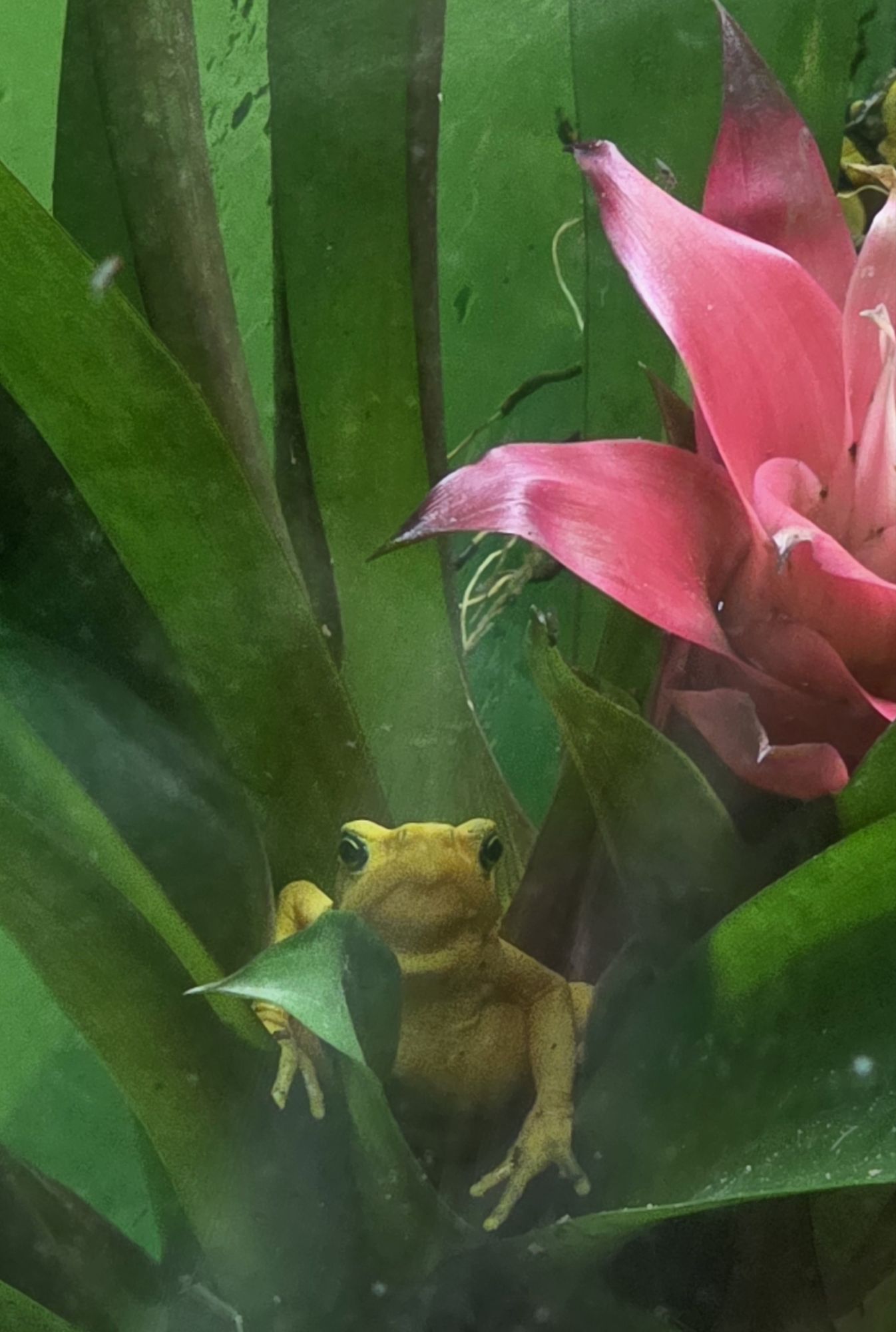
The Center consists of several small buildings with exhibits in addition to some exhibits being outside. One of the first buildings is the frog exhibit, which I think is hands down the best display in the center. In the exhibit there were many frogs native to Panamà. We learned that most of them are endangered thanks to a fungus that is affecting frogs around the world. The fungus is naturally occurring, and so scientists have not found a way to combat it. They are waiting for evolution to take its course and for the frogs to develop a resistance to it. In the meantime, some species may be lost.
The scale may be lost in these pictures – all these frogs are quite small. Some are just the size of my finger, and some just the size of a fingernail.


These two were in the same terrarium. One was just watching us, and the other was singing away in the background (you can see their chest as the white blur in the background of the first picture).


Finally, this is La Rana Dorada, the golden frog. The golden frog is native only to Panamà and is a cultural icon for the country. You see golden frogs represented in many places around the country. Many companies include golden frog as part of their name, including one of the largest microbreweries in the country. The golden frog is extinct in the wild due to the fungus, and is carefully managed in captivity.

While the frogs captivated us, that was by no means the only exhibit. We walked through aquariums (both inside and outside), an active testing laboratory, and more. At the end of the center there were some lovely views of the Pacific Ocean, along with many ships that were waiting their turn to go through the Canal.


There are two nature trails taking you through the forest to get back to the parking lot. Apparently there are sloths there, but we were not successful in spotting one. My search for sloths continues!! However, we did stop by the new LepiDome that’s been constructed, where we got up close and personal with some mariposas (butterflies).


On the way out, we met this fellow, who looked at us as if to say “See you next time.”

There will be a next time!
Leave a Reply